
High-protein foods
High-protein foods: protein per 100 g and per portion
High-protein foods include chicken breast, tuna, salmon, tempeh, tofu, eggs, edamame, cottage cheese and lentils. Per 100 g, cooked chicken breast gives about 31 g of protein and canned tuna about 26 g. Protein helps you feel full and keep muscle while losing weight. The table lists USDA values per 100 g and for a 150 g portion.
Get it on Google Play → Join the iPhone waitlist Available on Android and on the web. iPhone coming soon. Free to start.
- Lean animal foods give the most protein per calorie: tuna, chicken breast and fish.
- Tempeh, tofu, edamame and lentils are the strongest plant options.
- Most healthy adults need at least 0.8 g of protein per kg of body weight a day, and more if they train.
Protein in common foods
| Food (USDA entry) | FDC ID | Calories per 100 g | Protein per 100 g | Protein in a 150 g portion |
|---|---|---|---|---|
| Chicken breast, roasted, no skin Chicken, broilers or fryers, breast, meat only, cooked, roasted | 171477 | 165 | 31.0 g | 47 g |
| Tuna, canned in water, drained Fish, tuna, light, canned in water, without salt, drained solids | 171986 | 116 | 25.5 g | 38 g |
| Peanuts, raw Peanuts, all types, raw | 172430 | 567 | 25.8 g | 39 g |
| Salmon, farmed, cooked Fish, salmon, Atlantic, farmed, cooked, dry heat | 175168 | 206 | 22.1 g | 33 g |
| Tempeh Tempeh | 174272 | 192 | 20.3 g | 30 g |
| Tofu, firm Tofu, raw, firm, prepared with calcium sulfate | 172475 | 144 | 17.3 g | 26 g |
| Egg, hard-boiled Egg, whole, cooked, hard-boiled | 173424 | 155 | 12.6 g | 19 g |
| Edamame, prepared Edamame, frozen, prepared | 168411 | 121 | 11.9 g | 18 g |
| Cottage cheese, 2% fat Cheese, cottage, lowfat, 2% milkfat | 172182 | 81 | 10.4 g | 16 g |
| Lentils, boiled Lentils, mature seeds, cooked, boiled, without salt | 172421 | 116 | 9.0 g | 14 g |
| Milk, 2% fat Milk, reduced fat, fluid, 2% milkfat | 171267 | 50 | 3.3 g | 5 g |
Which foods are highest in protein?
Among everyday foods, cooked chicken breast, canned tuna, peanuts, salmon and tempeh have the most protein per 100 g in the USDA data, from about 20 to 31 g. Eggs, tofu, edamame and cottage cheese follow. For weight loss, leaner options give more protein for fewer calories.
What are the best high-protein foods for weight loss?
Choose foods with a lot of protein for few calories: tuna in water has about 25.5 g of protein for 116 calories per 100 g, and chicken breast about 31 g for 165. Tofu, tempeh, eggs and lentils are good lower-cost and plant-based choices. Cooking oil and sauces add calories, so log them too.
How much protein do I need a day?
The recommended dietary allowance for healthy adults is 0.8 g per kg of body weight, so a 70 kg adult needs at least 56 g. People who exercise regularly are advised more, often 1.2 to 2.0 g per kg. Older adults and people with health conditions should ask a professional.
Work out your number with the protein calculator.
What are high-protein choices at a hawker centre?
Look for plain lean protein with fewer sauces and less fried coating: steamed or soya sauce chicken, fish soup, tofu and egg dishes, and yong tau foo with tofu and fish items. Portion and cooking method change the numbers a lot, so treat these as general pointers, not measured values.
For measured values per serving, see Singapore hawker food calories.
High-protein breakfast foods
Breakfast foods with protein include eggs, plain Greek yogurt, cottage cheese, tofu scramble and tempeh. The table shows USDA values per 100 g and the protein in an example breakfast portion, so you can compare what you would actually eat.
| Breakfast food (USDA entry) | FDC ID | Calories per 100 g | Protein per 100 g | Example portion (our assumption) | Protein in portion |
|---|---|---|---|---|---|
| Egg, hard-boiled Egg, whole, cooked, hard-boiled | 173424 | 155 | 12.6 g | 2 large eggs, about 100 g | 12.6 g |
| Greek yogurt, plain, lowfat Yogurt, Greek, plain, lowfat | 170903 | 73 | 9.9 g | one small tub, about 170 g | 16.9 g |
| Cottage cheese, 2% fat Cheese, cottage, lowfat, 2% milkfat | 172182 | 81 | 10.4 g | about 100 g | 10.4 g |
| Tofu, firm (as a scramble) Tofu, raw, firm, prepared with calcium sulfate | 172475 | 144 | 17.3 g | about 150 g | 25.9 g |
| Tempeh Tempeh | 174272 | 192 | 20.3 g | about 100 g | 20.3 g |
| Rolled oats, dry Cereals, oats, regular and quick, not fortified, dry | 173904 | 380 | 13.2 g | 40 g dry, before cooking | 5.3 g |
What are good high-protein breakfast foods?
Eggs, plain Greek yogurt, cottage cheese, tofu scramble and tempeh give the most protein in a typical breakfast portion in the USDA data, roughly 10 to 26 g depending on the serving. Oats add fibre and some protein. Flavoured yogurts and toppings change the numbers, so check labels.
How much protein should I eat at breakfast?
There is no official per-meal target. The recommended allowance is set per day, at 0.8 g per kg of body weight for healthy adults. One review of protein for weight management suggested about 25 to 30 g per meal as a practical aim, so a breakfast near that can help spread protein through the day.
Daily targets by body weight: protein for weight loss · protein calculator. People with kidney disease should ask a doctor first.
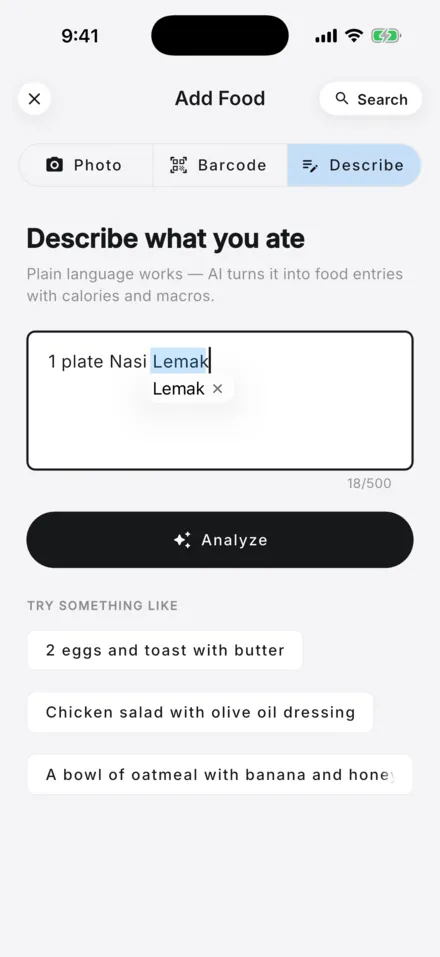
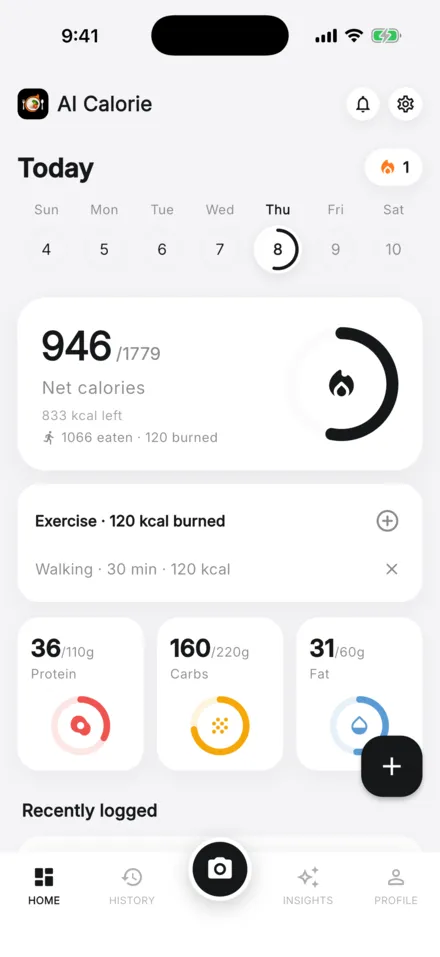
The app screenshots show the current English interface.
See AI Calorie in 39 seconds


Sources
- U.S. Department of Agriculture, FoodData Central, SR Legacy: Chicken breast, roasted, no skin (FDC 171477), Tuna, canned in water, drained (FDC 171986), Peanuts, raw (FDC 172430), Salmon, farmed, cooked (FDC 175168), Tempeh (FDC 174272), Tofu, firm (FDC 172475), Egg, hard-boiled (FDC 173424), Edamame, prepared (FDC 168411), Cottage cheese, 2% fat (FDC 172182), Lentils, boiled (FDC 172421), Milk, 2% fat (FDC 171267). Public-domain data, retrieved 11 November 2026.
- U.S. Department of Agriculture, FoodData Central, SR Legacy (breakfast table): Egg, hard-boiled (FDC 173424), Greek yogurt, plain, lowfat (FDC 170903), Cottage cheese, 2% fat (FDC 172182), Tofu, firm (as a scramble) (FDC 172475), Tempeh (FDC 174272), Rolled oats, dry (FDC 173904). Public-domain data, retrieved 19 November 2026.
- Institute of Medicine. Dietary Reference Intakes for Energy, Carbohydrate, Fiber, Fat, Fatty Acids, Cholesterol, Protein, and Amino Acids. National Academies Press; 2005 (RDA 0.8 g per kg).
- Leidy HJ, Clifton PM, Astrup A, et al. "The role of protein in weight loss and maintenance." Am J Clin Nutr 2015;101(6):1320S-1329S. PubMed 25926512 · doi:10.3945/ajcn.114.084038
Related: protein calculator · protein for weight loss · how to lose weight safely · macro calculator
AI Calorie gives general nutrition information and AI-generated estimates. It is not medical advice. See medical review and our Terms of Use.