
Protein calculator
Protein calculator: how much protein do you need a day?
Most healthy adults need at least 0.8 grams of protein per kilogram of body weight a day. People who exercise regularly or lift weights are advised higher amounts, and older adults a little more. This protein calculator shows the daily grams for your goal and the amount per meal.
Get it on Google Play → Join the iPhone waitlist Available on Android. iPhone coming soon. Free to start.
Use the protein calculator
How much protein do I need a day?
The recommended dietary allowance for healthy adults is 0.8 grams per kilogram of body weight, so a 70 kg adult needs at least 56 grams. That is a minimum to avoid deficiency, not an ideal for everyone. Needs are higher with regular exercise, older age, illness or injury.
How much protein do I need to build muscle?
The International Society of Sports Nutrition position stand says 1.4 to 2.0 grams per kilogram per day is enough for most people who train, which is 98 to 140 grams for a 70 kg adult. Spreading protein across meals and training with resistance matter as much as the daily total.
How much protein should older adults eat?
An expert group, the PROT-AGE study group, recommended 1.0 to 1.2 grams per kilogram per day for healthy adults over 65, and more for those who are ill or exercising. Higher intakes are not suitable for everyone, so check with a doctor or dietitian, especially with kidney disease.
Can you eat too much protein?
For healthy people, intakes within the ranges above are generally considered safe. Very high intakes add calories and can be a problem for people with kidney disease. Protein also supplies 4 calories per gram, so it counts toward your daily target. Ask a professional if you have a health condition.
Turn this into meals with the macro calculator.
Log what you eat in the app
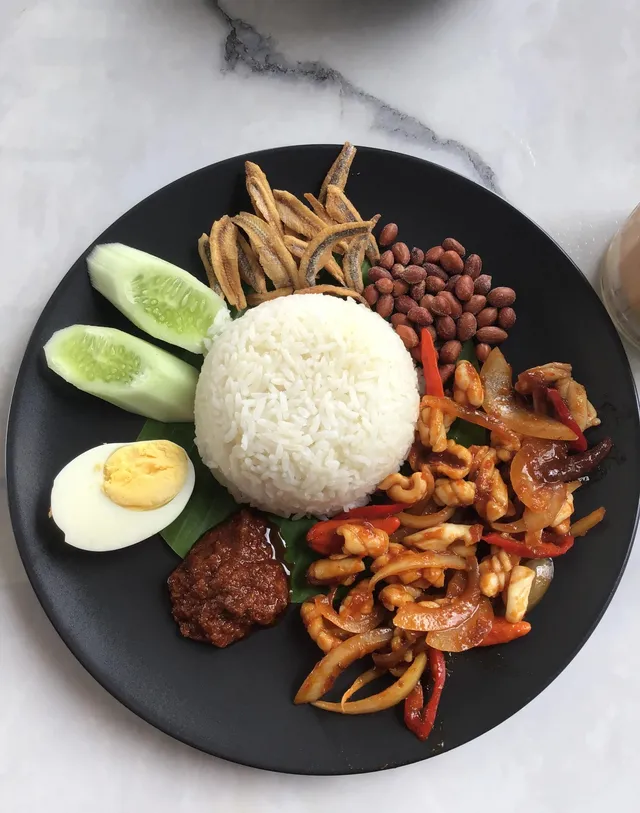
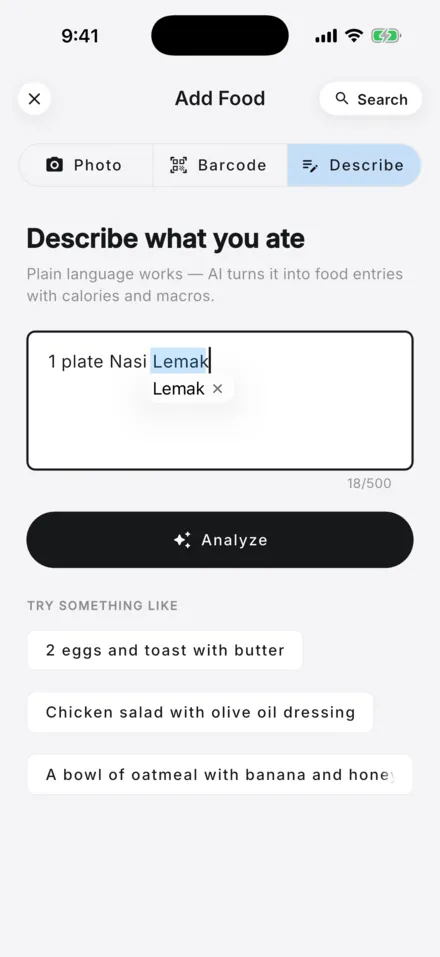
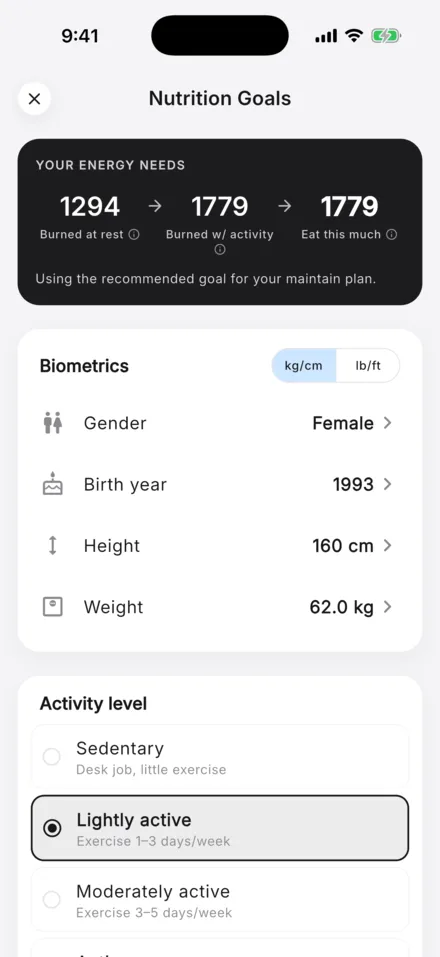
A target only helps if you know what you eat. AI Calorie estimates calories and macros from a photo or a short description. It is free to start with daily limits: see pricing. This calculator is not medical advice; see medical review.
Sources
- Institute of Medicine. Dietary Reference Intakes for Energy, Carbohydrate, Fiber, Fat, Fatty Acids, Cholesterol, Protein, and Amino Acids. National Academies Press; 2005. (RDA 0.8 g per kg.)
- Jager R, Kerksick CM, Campbell BI, et al. "International Society of Sports Nutrition Position Stand: protein and exercise." J Int Soc Sports Nutr 2017;14:20.
- Bauer J, Biolo G, Cederholm T, et al. "Evidence-based recommendations for optimal dietary protein intake in older people: a position paper from the PROT-AGE Study Group." J Am Med Dir Assoc 2013;14(8):542-559.
- Thomas DT, Erdman KA, Burke LM. "Position of the Academy of Nutrition and Dietetics, Dietitians of Canada, and the American College of Sports Medicine: Nutrition and Athletic Performance." J Acad Nutr Diet 2016;116(3):501-528.

AI Calorie gives general nutrition information and AI-generated estimates. It is not medical advice. See medical review and our Terms of Use.